Brand trust is rarely built during the crisis itself
Brand trust is rarely built during the crisis itself.
It is usually revealed there.
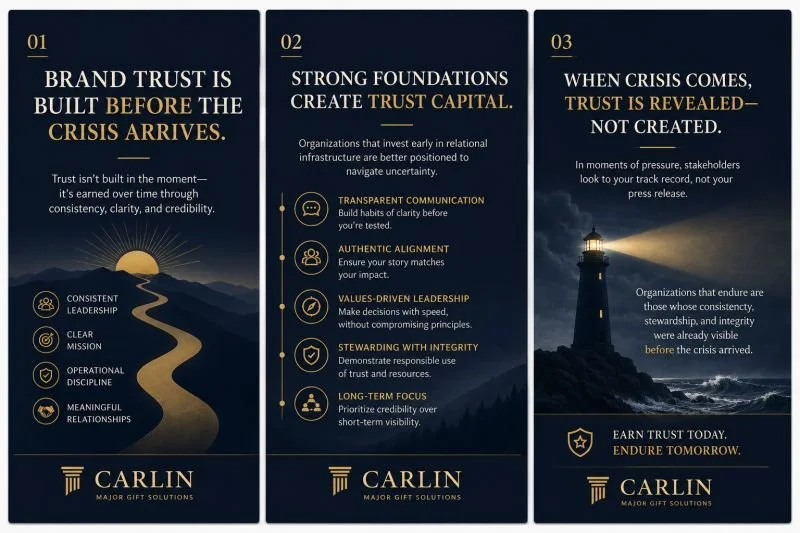
Organizations often assume that trust is primarily a communications function, something activated through statements, campaigns, or rapid response messaging when pressure emerges. But in practice, institutional trust is accumulated long before the moment of disruption arrives. It is built through consistency of leadership, clarity of mission, operational discipline, and the credibility of relationships developed over time with donors, communities, partners, and stakeholders.
The organizations that navigate volatility most effectively are typically the ones that invested early in relational infrastructure. They cultivated transparent communication habits before they were tested. They aligned fundraising narratives with authentic operational realities. They built leadership cultures capable of making decisions quickly without abandoning institutional values. And critically, they avoided over-optimizing for short-term visibility at the expense of long-term credibility.
In today’s environment, where public scrutiny accelerates instantly and stakeholder expectations continue to rise, brand trust has become a strategic asset, not merely a marketing outcome. Institutions that endure are not simply the loudest voices during difficult moments. They are the organizations whose consistency, stewardship, and integrity were already visible before the crisis arrived.